

UK Startup Cracks $2.7M in Funding to Turn Food Waste Into Egg-Replacing Proteins

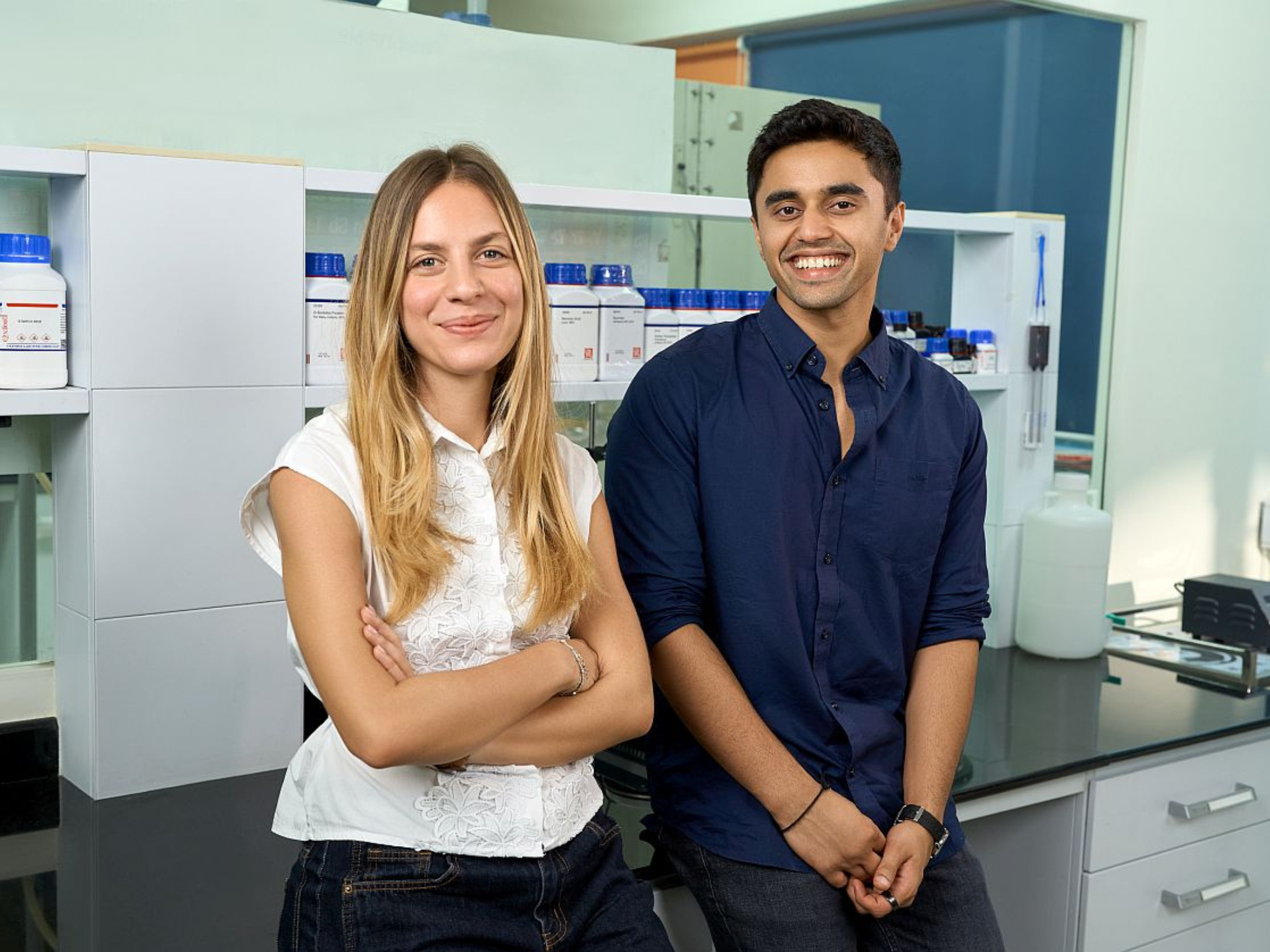
British startup The Bland Company has raised $2.7M in pre-seed funding to build functional plant proteins from agricultural sidestreams, starting with egg replacers.
The newest food tech startup to take on the egg crisis is focusing on food waste as a foundation, and has piqued the interest of early investors.
London-based The Bland Company has secured $2.7M in a pre-seed funding round led by Initialized Capital, with participation from Entrepreneurs First, Alumni Ventures, Transpose Platform and Behind Genius Ventures.
It will use the investment to scale up its protein functionalisation platform, which turns underused agricultural byproducts (like rice bran) into cost-efficient, high-performance plant proteins for a wide array of use cases.
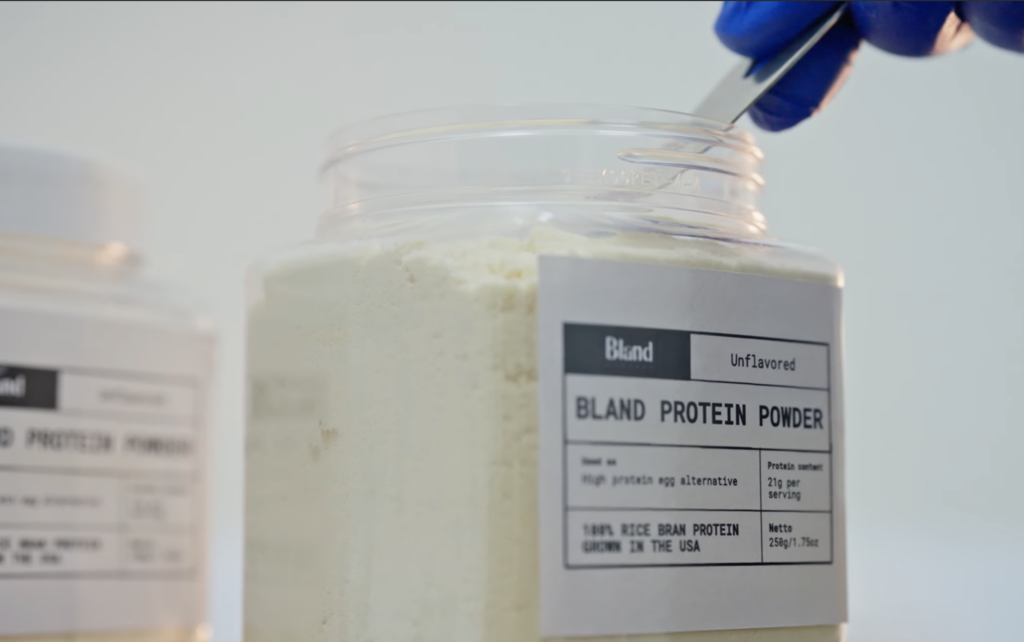
Its first target is the egg industry. The Bland Company’s ingredients can replace the foaming, binding and emulsifying properties of eggs across multiple food applications, without the price and supply volatilities that have plagued this sector.
“Eggs represent the ideal beachhead for a platform like Bland’s: the largest addressable use case, with acute and worsening customer pain, and no adequate existing solution,” said Zoe Perret, partner at Initialized Capital.
“Early results are compelling, with Bland’s first-generation ingredients already showing strong solubility, foaming, and emulsification concurrently in some benchmarks, surpassing egg white performance.”
An AI-led ‘feedstock-agnostic’ protein platform
The Bland Company was established in 2024 by Micol Hafez, previously the co-founder of women’s health startup Womco, and Yash Khandelwal, founder of watermelon seed paneer maker Funny Nani.
The firm uses a “feedstock-agnostic” process to turn abundant crops into future-friendly functional proteins. This means its technology can be adapted across multiple agricultural inputs, depending on what’s available in different regions globally.
“From my previous work, it became clear that plant feedstocks are the one truly meaningful path to solve the stresses facing our food supply chain,” Khandelwal said in an introductory video. “But while plants are abundant, their proteins lack the functionality of animal ones.”
The company sources plant inputs that are “cheap, abundant, and overlooked”, as well as nutrient-dense and sustainable. These are then put through a fractionalisation process, where target proteins are isolated. They’re then restructured to deliver animal-protein-like functionality: think enhanced solubility, stronger foaming, and more stable emulsions.
The process is “capital-light by design”, explained Perret, noting how it doesn’t involve any fermentation, bioreactors, or new equipment, and can plug into existing food manufacturing infrastructure.
“The Bland Company’s B2B ingredient platform is designed to slot directly into the procurement workflows of the world’s largest food manufacturers,” she said.
She added that one of its key technology drivers is artificial intelligence (AI), which enables the firm to understand how different feedstocks respond to their biochemical process, predict which substrates will yield which functional properties, and optimise processing parameters to hit specific performance targets.
The Bland Company charts path to becoming a biorefinery
A third of all eggs are used for food manufacturing, but over the last couple of years, new bouts of avian flu and Newcastle disease have wrecked the global supply. Hundreds of millions of chickens have been culled globally, just as demand for eggs has continued to increase.
This caused egg prices to reach a decade-long high in Europe last year, and break all-time records in the US – at one point, eggs were going for $1 a pop in some American cities.
It’s why many startups have introduced functional egg substitutes for B2B applications. Dutch firm Revyve produces an egg-replacing yeast protein, Spain’s MOA Foodtech has introduced a fermentation-derived ingredient to reduce egg use in various applications, France’s The Very Food Co makes a powdered aquafaba for foodservice and industrial manufacturing, and Israel’s Meala Foodtech has created a single-ingredient pea protein powder to replace chicken eggs.
Hafez suggested that “volatility has become the norm”, noting how egg prices can swing two- to threefold within a month for food companies: “There’s still no reliable and cost-effective solution that performs the same.”
The Bland Company says its proteins are instantly soluble and leave no clumps or chalkiness, making them an ideal base for beverages, batters and fortified blends. They also allow companies to replace eggs and emulsifiers with stable oil-water systems, lock in water to prevent dryness and crumbling, and provide consistent lift and volume across baked goods.
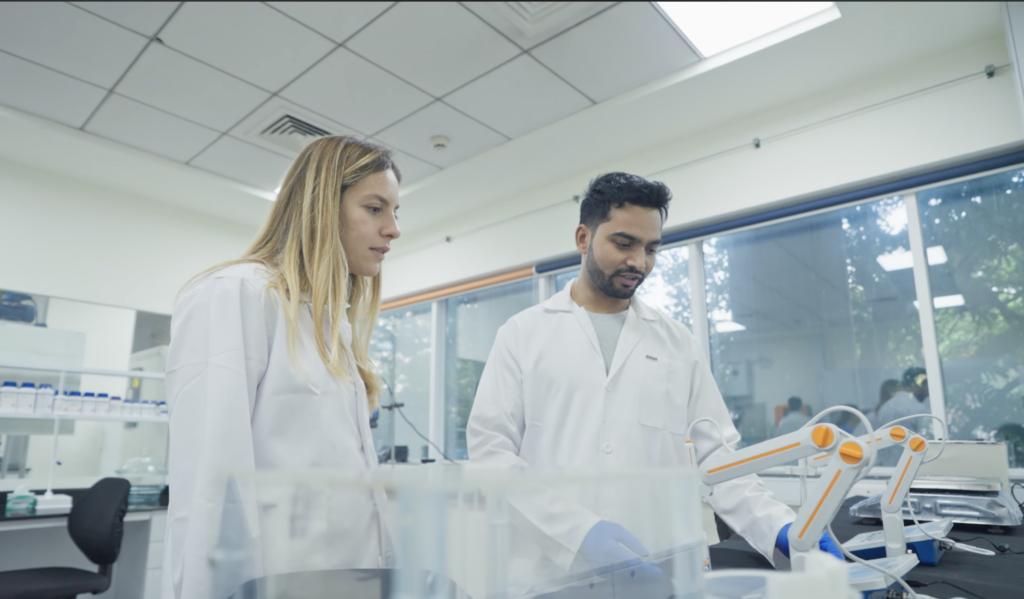
It’s already working with manufacturers in the US and Europe, whose interest would likely go beyond the functional advantage. “Our feedstock-agnostic platform unlocks new value from where the planet already grows, making sustainability not a compromise, but an economic advantage,” Hafez pointed out.
According to Perret, The Bland Company’s process can be tuned further to produce functional ingredients across entirely different categories. “Each new feedstock responds differently, with different functionality amplified depending on the substrate’s composition and the parameters applied. That variability is the foundation of an expanding product library,” she said.
“The long-term model is a biorefinery: one plant feedstock in, multiple high-performance functional ingredients out, serving food and potentially non-food applications. No large ingredient business is built on a single product, and Bland’s architecture is designed from the ground up for that kind of expansion.”